Remote employees
Employees of foreign companies — U.S., U.K., Canadian, EU, or other — working fully remotely. Typical applicants: a W-2 or PAYE salary, a written work-from-anywhere arrangement, and consistent monthly pay deposits.
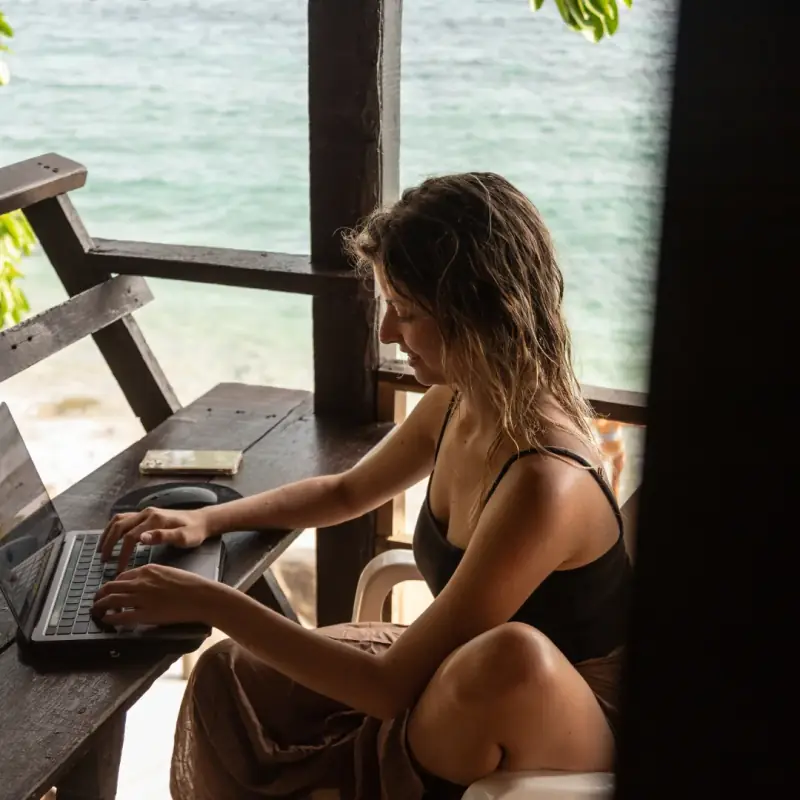
Colombia offers one of the most practical digital nomad visas in Latin America. If you work remotely for foreign clients or employers, you can live in Colombia legally — for up to two years.
 Top rated on Google
This guide covers eligibility requirements, income thresholds, health insurance rules, taxes, common rejection reasons, application timelines, and how to legally live in Colombia as a remote worker on the Colombian Digital Nomad Visa (formally known as the V-DN), open to citizens of the U.S., U.K., Canada, Australia, EU member states, and other visa-exempt countries.
Overview
Yes, Colombia has a specific visa for digital nomads and remote workers. The V-DN (Visitor – Digital Nomad) visa allows foreigners to live and work remotely in Colombia for up to two years, provided their income comes from clients or employers located outside of Colombia. The income threshold is modest — approximately three times Colombia's monthly minimum wage, or around USD $1,625 per month at current rates.
Who This Visa Is For
The Digital Nomad Visa is designed specifically for remote professionals who earn their income from outside Colombia. Common applicants include:
Check your nationality first.
The digital nomad visa is only open to citizens of countries that don't need a visitor visa to enter Colombia. If your country requires a visitor visa, you won't qualify for the V-DN — though we can help you find the right path.
See which countries are visa-exempt →Employees of foreign companies — U.S., U.K., Canadian, EU, or other — working fully remotely. Typical applicants: a W-2 or PAYE salary, a written work-from-anywhere arrangement, and consistent monthly pay deposits.
Web developers, designers, writers, marketers, and consultants invoicing international clients on a 1099, retainer, or per-project basis. Requires consistent foreign-source deposits and supporting contracts.
Owners of marketing, design, dev, or consulting agencies serving foreign clients. Profit distributions, owner draws, or salary from your agency entity all qualify — as long as the revenue is foreign-sourced.
Founders of subscription-software businesses with Stripe/Paddle/etc. revenue from non-Colombian customers. Bank deposits + the business's incorporation paperwork form the documentation backbone.
Channel owners, podcasters, and online course creators monetized through Google AdSense, Patreon, Teachable, Gumroad, or sponsorship deals from non-Colombian brands.
Strategy consultants, executive coaches, accountants, and other professionals delivering services to clients outside Colombia. Retainers and recurring engagements are the cleanest documentation profile.
Shopify, Amazon FBA, Etsy, and direct-to-consumer brand operators whose customers are based outside Colombia. Revenue platform statements + bank deposits demonstrate qualifying income.
Important: The Digital Nomad Visa does NOT allow local Colombian employment. Your income must come from foreign sources — you cannot work for Colombian companies or invoice Colombian clients under this visa. If you want to work locally, you'll need the Colombia Work Visa (M-5) instead.
Required Threshold
COP 5,252,715 / month — approximately USD $1,625
You must demonstrate consistent monthly income at or above this threshold from foreign clients or employers. The amount updates each January when Colombia adjusts the minimum wage.
Most remote workers with a stable international client base or employer qualify without difficulty. If your income is near the threshold, contact us before applying — documentation strategy matters.
How you're paid changes how you apply.
If you're a salaried employee of a foreign company, documenting your income is relatively straightforward. If you earn through platforms or as a contractor with clients — YouTube, Upwork, Stripe, Shopify, and the like — it's less obvious, because that income often can't be documented the same way a salary is. Getting this wrong is one of the most common reasons digital nomad applications get held up. There are clean ways to handle it, but the right approach depends on your situation — and it's the first thing we sort out with you before you file.
Requirements
Employment contract with your foreign employer plus last three months of pay stubs.
Bank statements from the last 3–6 months plus client contracts or invoices showing consistent foreign-source income.
Bank statements plus business registration documents and evidence of foreign revenue.
The digital nomad visa is only available to nationals of countries that don't require a visitor visa to enter Colombia. Your passport must be valid for at least six months beyond your application date, with at least two blank pages.
Coverage valid in Colombia for the duration of your intended stay. Colombian SISBEN is not sufficient for this visa.
Current photo meeting Cancillería specifications.
Filed through the Cancillería online portal.
We guide you through preparing and validating every required document to help avoid delays or rejections.
Requirements may vary based on individual circumstances and current Colombian immigration regulations.
A note on background checks.
A criminal background check is only a formal requirement for the pension (retirement) visa. But as Colombia tightens security and immigration screening, Cancillería is increasingly requesting a police or criminal record certificate on other visa types too — even where it isn't formally listed. We recommend having a recent one ready, apostilled and translated into Spanish, so a request doesn't hold up your application. We'll tell you whether your case is likely to need one.
We review every apostille, translation, and supporting document with you before filing — catching the issues that cause Cancillería to send the case back.
See how the process worksThe Process
We guide you through every step. No surprises, no confusing paperwork, no figuring it out on your own.
See how we navigate the Cancillería process with hundreds of clients each year.
We review your income sources and documentation to confirm you qualify before you begin gathering documents. This avoids wasted effort if there are eligibility issues to address first.
We give you a specific checklist based on your income type (employee vs. freelancer vs. business owner). We advise on apostilles and certified translations so nothing gets flagged during review.
We submit your complete application through the Cancillería portal. If the government requests additional documentation or clarification, we respond on your behalf.
Once approved, you'll receive your visa electronically. You must register with Migración Colombia within 15 days of approval (or arrival, if applying from outside Colombia). We walk you through this step.
Once in Colombia with your visa, you'll apply for a Cédula de Extranjería — Colombia's foreign national ID card — through Migración Colombia. This is a required step for all M and V long-stay visa holders. We guide you through the process.
Why Work With Us
Getting the digital nomad visa right the first time matters — a rejection delays your move and requires reapplication.
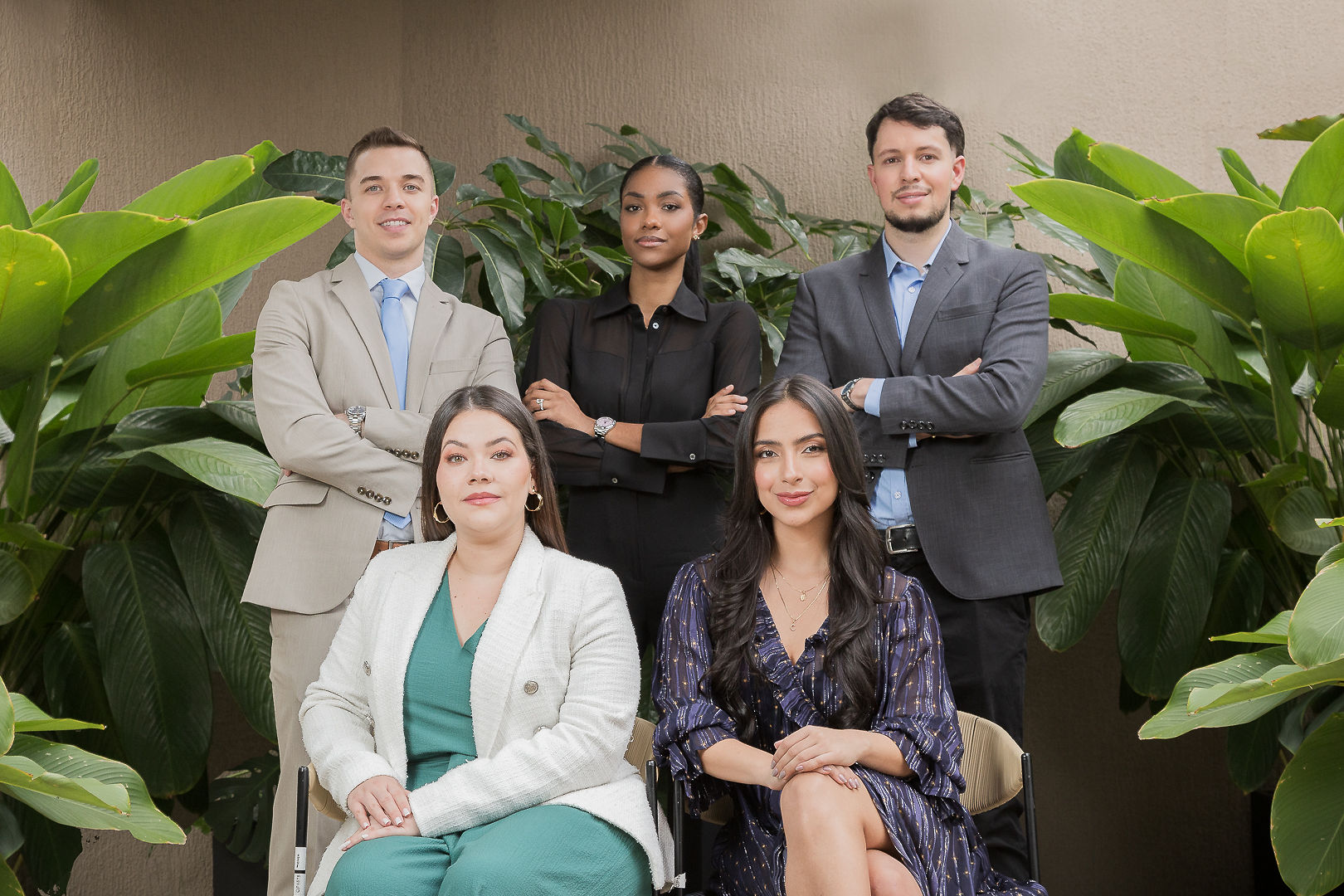
Licensed Colombian immigration attorneys — not intermediaries
We've helped hundreds of remote workers successfully relocate to Colombia
Bilingual team: we communicate in English and handle all filings in Spanish
Fully virtual — we work with clients from anywhere in the world
Flat-fee, all-inclusive pricing with no hidden costs
4.9 stars on Google · Trusted by 1,400+ clients
What Our Clients Say
"I want to thank Colombian Visa Services for all their help during my visa process. They were very flexible — they even let me reserve their services months before I applied, which helped me plan ahead. They always answered my emails quickly and clearly, and I never felt left alone. Even when I had difficult steps like getting my fingerprints done from abroad, they gave me practical solutions. In the end, I received the maximum amount of time on my visa. A special thank you to María Camila Ramírez Álvarez, who took the time to understand my situation. I truly felt supported."
Philippe Boudreau
Google Review
"I used Colombia Visa Services to support my Digital Nomad Visa application. Every step of the way Maria was great — always quick to respond and always provided clear information. I had initially hesitated around paying for the assistance, thinking I may be able to handle it myself. Having now gone through the process, I don't believe I would have stood a chance of succeeding without the support and guidance from Maria. I'd strongly recommend this firm."
Oli Moffatt
Google Review
"Even though I am an immigration attorney in the United States, I chose to have my visa professionally processed through Colombian Visa Services. Their attention to detail, rapid responses to any concerns or questions, and their professionalism made the process delightful and easy. Update 2025: Amazing service for my renewal digital nomad visa. The lawyer Maria is very responsive and explained the process so that my visa was approved in just days after filing. I cannot say enough good things about Colombian Visa Services."
Bonnie Smerdon
Google Review
"Maria helped me with my digital nomad applications. She was very helpful every step of the way. I highly recommend!"
Peter
Google Review
"MADE IT EASY! From start to finish they were able to assist me step-by-step with my visa application. Maria had great communication throughout and answered every question I had."
Mike Nichols
Google Review
"I had an excellent experience working with Natalia Torres from Colombian Visa Services. Her expertise was clear from the very first consultation, and she guided me through each stage of the visa process with patience and clarity. Natalia was always helpful, responsive, and thorough, and thanks to her support my visa was issued without any complications. Truly exceptional service."
Jeffrey Sutyla
Google Review
Take the qualifier or speak with our bilingual legal team before you apply.
Timeline & Costs
the Cancillería has 30 calendar days to decide a complete application. In practice, applications often take the full 30 days, and often uses the full window.
Granted for up to 2 years — often less. The period is typically tied to how long your health insurance is valid and is at the discretion of the immigration authority. When your visa expires, you can renew it or transition to a Migrant (M) visa if you meet the requirements for long-term residency.
Approximately USD $230 in total — a study fee of about $52 (paid when you apply) plus an issuance fee of about $177 (paid only after approval). Additional costs include apostille fees, certified translation, and health insurance premiums. We provide a full cost breakdown upfront before you commit.
Colombia's minimum wage (SMMLV) is adjusted each January. We confirm the current requirement at the time of your application.
How Applications Are Reviewed
the Cancillería reviews V-DN applications case-by-case. Approval is discretionary — meaning every applicant is evaluated on the full picture, not just whether you cross a threshold. Strong, internally consistent documentation is what moves applications through quickly.
Reviewers compare every line of every document. Your employer letter, contract, bank statements, and visa application form must tell the same story about who you work for, how much you earn, and where the money comes from.
Bank statements showing recurring monthly deposits in stable amounts read better than sporadic transfers. Cancillería wants to see that your income is reliable — not a one-time windfall or speculative revenue.
Apostilles confirm a foreign document is genuine. Certified translations confirm what it says. Without both, reviewers cannot validate your evidence, and the application stalls.
Apostilles must come from the right authority for the document (federal vs. state). Translations must be done by a Colombian certified translator — not Google Translate, not your bilingual cousin. Mistakes here are the #1 cause of refile requests.
Prior Colombian visa history, overstays, prior denials, or unusual travel patterns can prompt additional scrutiny. We address these proactively in the application package so reviewers don't have to guess.
The policy must be international, must be valid in Colombia, must cover medical expenses (not just travel), and must run for the full intended stay. Travel-only policies and gaps in coverage are common rejection triggers.
Approval is discretionary and evaluated case-by-case. A complete, internally consistent application from a clear foreign-source income earner is the strongest predictor of a smooth approval.
Rejection Reasons
Outright denials are rare, but delays and refile requests are common — and the underlying causes are predictable. Here are the most frequent reasons V-DN applications stall or fail, and what each one actually means in practice.
Talk to an Attorney
Send us a few details and a Colombian immigration attorney will review your situation — typical reply within one business day. No obligation, no high-pressure sales — just an honest read on whether the Digital Nomad Visa is the right fit.
What to Expect
This section is for people who are still deciding. If you're already committed to applying, skip to the FAQ below.
Colombia is considerably more affordable than most Western countries. Medellín, Bogotá, Cartagena, and Santa Marta are all popular bases for remote workers. Monthly living costs for a comfortable lifestyle range from approximately USD $1,200–$2,500 depending on the city and your habits — often well below the income threshold for the visa itself.
Fiber internet is widely available in major Colombian cities. Co-working spaces have expanded significantly across Medellín and Bogotá in recent years.
Colombia operates on Colombia Time (COT), UTC-5, with no daylight saving adjustments. This puts Colombia squarely in between U.S. East and West Coast time zones — workable for most remote teams.
Holding a Digital Nomad Visa does not automatically make you a Colombian tax resident. Colombian tax residency is typically established after 183 days of continuous presence in a calendar year. We recommend consulting a Colombian tax professional if you plan to stay for extended periods.
Taxes & Residency
Holding a Digital Nomad Visa does NOT automatically make you a Colombian tax resident — but spending enough time in Colombia can. Here's how the rules generally work for remote workers planning extended stays.
Colombian tax residency is generally triggered by physical presence of 183 days or more in any 365-day window — not necessarily a calendar year. Once you become a tax resident, you may have Colombian tax obligations on your worldwide income.
Your immigration status and your tax residency status are governed by different rules. A Digital Nomad Visa is an immigration document — it doesn't grant tax exemption, and being on the visa for less than 183 days doesn't automatically protect you from other tax obligations either.
Your home country's tax obligations may continue regardless of where you live (the U.S. taxes citizens on worldwide income; other countries use residency-based rules). Colombia has tax treaties with some countries that affect how income is treated — these are case-by-case.
Tax planning for digital nomads is a specialized area. If you're planning to spend more than 6 months per year in Colombia, talk to a Colombian-licensed accountant who handles foreign clients. We can refer you to accountants we trust, but this is outside our practice area.
Disclaimer: This section is informational only and not legal or tax advice. Colombian tax law is complex and changes regularly. Always consult a qualified Colombian tax professional for guidance specific to your situation.
Family & Beneficiaries
Yes — the Digital Nomad Visa supports beneficiary applications for your immediate family. Spouses, partners, and dependent children can apply as beneficiaries tied to your primary visa. Here's what to expect.
Legally married spouses qualify as beneficiaries. You'll need an apostilled and translated marriage certificate as part of the application package. The spouse's visa is tied to yours — if your V-DN ends, so does theirs.
Unmarried domestic partners can qualify under Colombia's "unión marital de hecho" framework, but you must establish the partnership formally — typically with two years of cohabitation evidence or a notarized declaration. This adds complexity, so plan ahead.
Biological and adopted children up to age 25 qualify as dependents. Adult children 25 and older can also qualify as dependents if they have a documented disability that prevents economic independence. Birth certificates must be apostilled and translated. Children inherit the same visa duration as the principal — they will need their own Cédula de Extranjería after arrival.
Beneficiaries don't need their own qualifying income — your V-DN income supports the family. However, the family group is expected to have adequate financial resources, which is usually satisfied by the primary applicant's threshold income.
Beneficiary Digital Nomad Visas do not grant the right to work in Colombia — same restriction as the principal V-DN. If your spouse needs work authorization, they would need their own qualifying visa or a different category entirely.
Beneficiary V-DN applications are submitted AFTER the principal's V-DN has been approved by Cancillería, not simultaneously. We prepare the beneficiary documentation in parallel so each spouse, partner, or dependent child's application can go in as soon as your principal V-DN is granted — minimizing the gap between your approval and theirs.
Renewal & Long-Term
The V-DN is a two-year window. Before it expires, you'll need to decide: renew, transition to a different visa category, or leave. Here are the typical paths our clients consider — and what each one means for long-term residency in Colombia.
If your remote-work situation hasn't changed, you can renew the V-DN as long as you still meet the income and insurance requirements. Renewals are filed before expiration and reuse most of the original documentation (refreshed bank statements, current insurance, updated employer letter). Renewals are not guaranteed — always have a plan B (a Migrant-category transition, another visa route, or an exit plan) in case discretion doesn't fall your way.
If you want to build toward the Colombian Resident (R) visa, the M-category is the path. V time doesn't count toward residency, but M time does. Common transitions: V-DN to M-11 (retirement) if you're approaching that age, M-6 (investment) if you've bought property, or M-7 (marriage) if your status changes.
If you'll receive a qualifying pension within your V-DN window, the Retirement Visa is often the cleanest next step. It offers up to three years of validity per cycle and counts toward residency. We help clients time the transition to minimize gaps.
Buying Colombian property at or above the qualifying investment threshold opens the M-6 investment visa pathway. For digital nomads planning to settle, combining real estate ownership with an M-6 transition is a common long-term play.
Many V-DN holders form long-term relationships in Colombia. If you marry or formally register a partnership with a Colombian citizen or resident, you can transition to the M-7 marriage visa — which offers a direct path to the Resident (R) visa.
After accruing qualifying time on an M visa (typically two continuous years, with category-specific variations), you can apply for Colombia's Resident (R) visa — the closest Colombian equivalent to the Resident (R) visa. Renewable every five years.
Possible Next Steps
Retirement Visa (M-11)
for clients aging into pension income while on the V-DN
Investment Visa (M-6)
for digital nomads buying Colombian property
Marriage Visa (M-7)
for clients marrying a Colombian citizen or resident
Resident Visa (R)
the long-term destination — renewable every 5 years, with the same documentation cycle at each renewal
Real Application Examples
Anonymized profiles of approved V-DN applications we've handled. Names, exact figures, and identifying details are removed — these are representative case profiles to illustrate what a successful application looks like.
Independent web developer invoicing three long-term U.S. clients on monthly retainers. Filed from inside Colombia in the first 45 days of a 90-day visa-free stay.
Software engineer employed full-time by a U.K. tech company with written remote-work authorization. Applied from London before traveling to Colombia.
Founder of a SaaS company incorporated in Canada with foreign customer base. Filed from Toronto after a discovery visit to Medellín.
These examples are anonymized and representative. Every application is evaluated case-by-case — past approvals do not guarantee future outcomes. Specific figures, names, and identifying details have been removed.
FAQ
Talk to our bilingual attorneys — free initial consultation.

Colombian Visa Services
Typically replies in minutes
Hola 👋
How can we help with your Colombian visa today?
now